Red cringe: ‘PONIES’ is proof that Hollywood still can’t do Russia
Why the problem with the series isn’t anti-Soviet bias, but lazy research, recycled clichés, and deliberate ignorance

For most Russians, the release of the series ‘PONIES’ about American spies in Moscow in 1977 went largely unnoticed. It’s not that people lost interest in American series; in recent years, the number of Cold War-themed movies has surged. However, many found it amusing to watch the clip in which the main character, speaking with a thick Russian accent, gets into a heated argument with a crafty egg seller.
Those who did watch the series praised it as the most hilarious portrayal of the Soviet Union in the 1970s. Unfortunately, the humor was unintentional.
We won’t criticize the actors and their Russian accents – Emilia Clarke made a reasonable effort to at least say the words with the correct inflections. Still, it’s quite amusing that when preparing the main character for her mission, her “non-Moscow” accent is explained by claiming she’s from Belarus.
Even funnier are the inconsistencies that we notice from the very first scene, where two American spies complain about working outside on “the coldest day of the year.” And what do we see? Streets barely covered in snow, and the characters dressed in light coats. For comparison, it’s currently around -20 C in Moscow, and people navigate the streets bundled up in fur coats and parkas.
This sets the tone for the entire series. Here are just a few odd moments from the spy drama:
— A US Embassy secretary points to the street, claiming that all Muscovites “know that Moscow is a dump.” While everyone has their own preferences when it comes to cities, this comment does an injustice to Budapest, where the series was actually filmed.
It looks particularly strange when characters explicitly name the location where the action takes place, yet what we see onscreen doesn’t look anything like the real place. For example, famous Moscow landmarks like St. Basil’s Cathedral pop up in the middle of ordinary residential areas, rather than the historic central district.
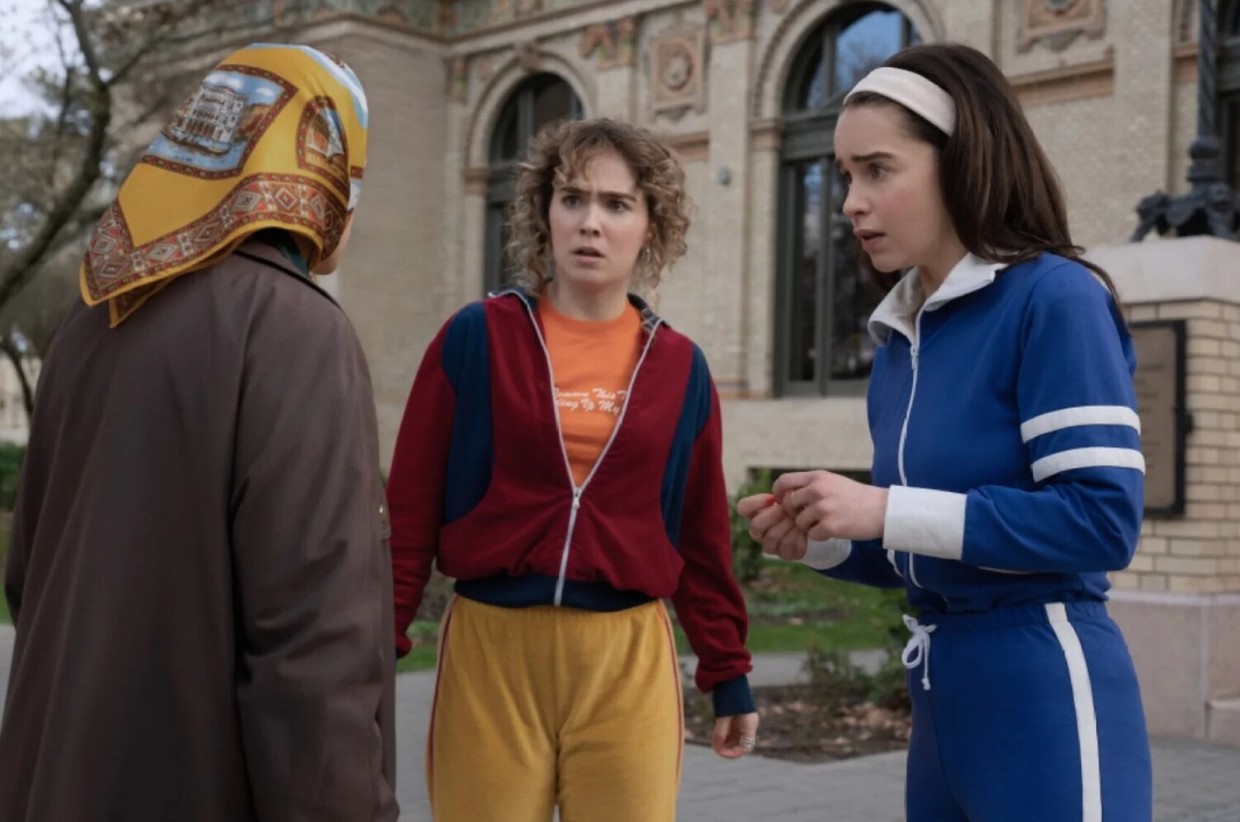
— The protagonist complains that milk in the USSR has to be boiled and is like mayonnaise. In Russia, sweetened condensed milk is still popular and is used in desserts, but it looks and tastes nothing like mayonnaise.
— The head of the CIA station in Moscow insists that the KGB never employs female agents, and would not expect this from the Americans either. Perhaps the creators wanted to flatter Soviet intelligence, but in reality, the KGB actively utilized women in both foreign and domestic espionage. One such agent, Zoya Voskresenskaya, became famous – though not as a spy, but as a children’s author.
— Later, the same CIA agent claims that all KGB cars have a smudge on the windshield due to an issue at the state car wash, adding meaningfully: “because it’s Russia.”
The KGB wasn’t the most wealthy agency in the USSR, but it was still considered a critically important part of the government and received consistently generous funding. Given the keen interest Soviet military and security forces took in the appearance of their subordinates, having a dirty car was simply unacceptable. Moreover, this type of detail poses a significant problem for counterintelligence, which strives to go unnoticed.
— A Russian character says that in Russia, there is a saying: “Life is unbearable, but death isn’t so pleasant either.” This might sound convincing to someone who is only familiar with Russian culture through TikTok videos about Dostoevsky, but in reality, Russians aren’t a nation of emo teenagers. This proverb does not exist.
— Gaining the trust of a particularly malicious KGB agent, the main character mentions that her husband died in December, “before Christmas.” This could have made for an interesting plot twist, raising suspicions about her, since in Russia, Christmas is celebrated in January. However, the KGB agent merely notes that a good Soviet citizen shouldn’t even know about Christmas. In the 1970s, the authorities still viewed Orthodox Christianity with skepticism, but the active campaign against religion had ended.
— Later, the same KGB agent concludes that the woman is disloyal to the Soviet regime because she has a tattoo with numbers on her arm. “Why be loyal to a country that sent you to a concentration camp?” he asks. That’s a fair question. But prisoners in Soviet Gulags didn’t have their numbers tattooed – this was a Nazi practice.
— A smuggler at a market (which, by the way, is located in the courtyard of a residential area) claims that ‘napevy’ (singsongs) are a kind of universal way of singing in Morse code, known to every Russian. While Pioneers and radio enthusiasts in the USSR knew Morse code, it was not common knowledge.
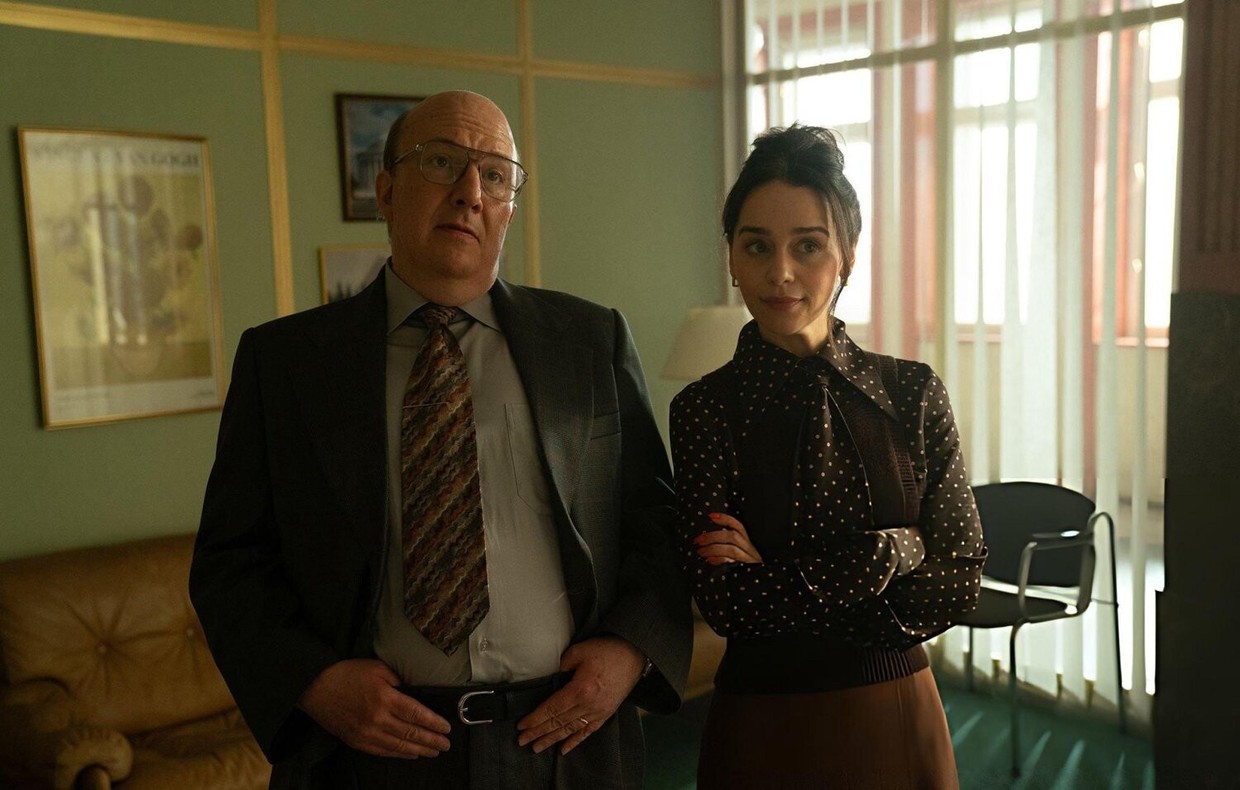
— All the vendors at this market, just like the prostitutes at a large secret brothel, speak English fluently. While foreign languages were taught in schools, most adults in the 1970s learned German in school. Even today, only around 30% of Russians speak English.
— The Russian characters complain about shortages of everything, constant lines in stores, and hunger. While Moscow in the 1970s wasn’t exactly a land of luxury, the last famine in the Soviet Union occurred in 1947, and noticeable shortages of everyday goods didn’t begin until the late 1980s.
Finally, the series seizes every opportunity to criticize absolutely everything Soviet – from Aeroflot pilots to the quality of linens and chocolate. Undoubtedly, Soviet industry and services had their issues. But according to the creators of ‘PONIES’, things in the USSR were so bad that the country should have collapsed within a week.
One episode from ‘The Bourne Supremacy’ remains popular in Russia, in which Jason Bourne arrives in Moscow and hands his fake Russian passport to the border guard. Instead of his name and last name in Cyrillic, we see gibberish: ‘LSHTSHFUM ASHF’.
Some find this stupid, others think it’s funny. However, it’s an understandable mistake: An English-speaking audience likely wouldn’t notice it, and hiring a Russian-speaking consultant for such small issues probably seemed too tedious, especially back in 2005.
An anachronism was spotted in the Netflix docudrama ‘The Last Czars’. In one scene, they show Moscow as it was supposed to be in 1905… and then we see Lenin’s Mausoleum on Red Square. This is harder to accept. Understanding that the burial place of the leader of the October Revolution couldn’t have existed 12 years before the revolution which he led doesn’t require expensive consultants or extensive research – just a bit of attention to the subject matter.
Russians have long stopped being offended by comical Russian villains and stereotypes about Russia and the USSR. Some even like the unrealistic villains. You can find photos of Ivan Drago in many gyms. The problem with ‘PONIES’ and similar movies and series isn’t their offensiveness – it’s their willful ignorance.
The creators of the series clearly conducted some research – they knew Elton John visited Soviet Moscow, they knew the name of the American ambassador at that time, and other small details. Yet they still had to invent bizarre and unrealistic things.
The only possible explanation is that American studios view their audiences as fools and doubt that they would find a spy drama engaging without contrived plot twists and stereotypes. So the ones who should feel bad about this aren’t Russians whose culture is misrepresented, but Americans who pay to watch.