Why the US hit pause on Iran – and why it doesn’t mean de-escalation
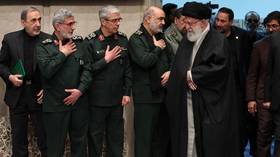
The anticipated US strike on Iran, widely expected on February 1, ultimately did not take place. American forces had been deployed across the region, logistical chains aligned, and operational scenarios prepared. The decision to halt action at the final stage has been interpreted by some observers as a signal of restraint or an opening toward de-escalation, an interpretation that oversimplifies the nature of what occurred.
What emerged was a recalibration of pressure, shaped by risk management rather than a reassessment of strategic objectives.
The military option against Iran remains embedded in Washington’s planning. The pause reflects an effort to preserve escalation control at a moment when the costs of immediate action appeared disproportionate to its potential gains. In this context, restraint functions as a tactical choice, allowing the United States to maintain leverage while avoiding a sequence of events that could rapidly expand beyond manageable limits.
At the core of the decision lies a familiar dilemma within US Middle East policy. Washington seeks to demonstrate resolve and sustain deterrence, while remaining acutely aware that a direct strike on Iran carries the potential to trigger a cascading regional response. Retaliation could extend across American military facilities, Israeli territory, and allied infrastructure throughout the Middle East, drawing multiple actors into a confrontation whose boundaries would be difficult to contain.
Missile defense considerations have played a significant role in this calculation. Ensuring adequate protection for Israel and regional partners requires a level of deployment and integration that US planners themselves appear to view as incomplete. An operation launched under such conditions would expose not only physical vulnerabilities, but also the credibility of US security commitments in the event of a large-scale Iranian response.
Domestic political constraints further complicate the picture. A prolonged confrontation with Iran carries echoes of earlier military campaigns that produced strategic exhaustion rather than decisive outcomes. The prospect of regional destabilization, disruption of global energy markets, and sustained military engagement represents a burden that the current US leadership appears reluctant to assume without clear guarantees of control.
Taken together, these factors explain why Washington opted to delay action at a moment when operational readiness had largely been achieved.
Tehran has responded by combining deterrent messaging with carefully calibrated diplomatic signals. Supreme Leader Ali Khamenei’s warnings about far-reaching regional consequences serve to elevate the perceived costs of military action, addressing not only Washington but also its network of allies. Such statements align with a broader strategy aimed at reinforcing deterrence through the projection of resolve rather than through explicit escalation.
Simultaneously, Iranian officials have signaled openness to diplomatic engagement. Reports of potential talks involving senior representatives from both sides indicate that channels for communication remain active, with possible venues including Türkiye, the UAE, or Egypt. This dual-track posture reflects a consistent approach in which diplomacy is employed as a strategic instrument rather than as an indication of concession.
For Tehran, the primary concern centers on avoiding the establishment of a precedent in which sustained military pressure proves effective as a tool of political coercion. Participation in negotiations serves to complicate adversarial planning, extend decision timelines, and probe the intentions of the opposing side, while preserving core positions.
Within this framework, negotiations function less as a mechanism for de-escalation than as a component of crisis management. Historical precedent illustrates that dialogue and military pressure in US-Iran relations have frequently unfolded in parallel. Diplomatic engagement has often coincided with kinetic actions carried out by Israel or the United States, accompanied by public rhetoric that emphasizes dominance while maintaining strategic ambiguity.
Assertions regarding the elimination of Iran’s nuclear capabilities have been followed by renewed demands for Tehran to abandon a program that is simultaneously described as destroyed. Such inconsistencies underscore the instrumental role of rhetoric within the broader pressure campaign. Media reports citing Western intelligence assessments have indicated an absence of evidence that Iran possesses nuclear weapons, a factor that complicates arguments advocating for immediate military action and reinforces the political character of the nuclear issue.
Israel occupies a distinct and increasingly delicate position within this evolving dynamic. Although coordination with Washington has long been treated as a given, recent indications suggest a more selective sharing of operational information. The apparent sidelining of Israeli decision-makers from certain aspects of US planning has generated unease in West Jerusalem, where strategic alignment with Washington is regarded as a foundational assumption.
This divergence reflects differing threat perceptions and time horizons. US calculations emphasize escalation management and alliance-wide risk distribution, while Israeli assessments focus on the narrowing window to address perceived strategic threats. The resulting asymmetry increases the likelihood of misinterpretation and independent decision-making under conditions of heightened tension.
Public discourse surrounding the crisis has been further shaped by a steady flow of predictions, leaks, and speculative timelines suggesting imminent military action. Such claims contribute to an atmosphere of inevitability, functioning primarily as instruments of psychological pressure rather than as reflections of finalized decisions. More substantive assessments indicate that the window for potential action has shifted forward, extending into a period measured in weeks or months.
This shift does not indicate stabilization. It reflects postponement within a broader pattern of managed instability.
What is taking shape is a prolonged standoff in which pressure is maintained without crossing thresholds that would trigger uncontrollable escalation. Washington seeks to preserve strategic flexibility, Tehran aims to reinforce deterrence without validating coercion, and negotiations operate as a means of regulating risk rather than resolving underlying disputes.
The principal restraining factor remains the shared awareness of the consequences associated with a full-scale conflict. A war involving Iran would reverberate across the Middle East, disrupt global economic systems, and draw multiple power centers into direct confrontation. This understanding continues to shape decision-making on all sides.
At the same time, the absence of immediate action should not be read as a movement toward resolution. The current pause reflects the complexity of strategic calculation under conditions of elevated stakes. Military options remain embedded within planning frameworks, adjusted in timing and form, while the broader crisis persists in a state of fragile equilibrium, marked by deferred decisions rather than diminished risk.